

A sideboard top is a serving surface in a dining room and a drop zone everywhere else, so it takes hot dishes and spills without ceremony. Sideboards are wide, which makes the top the single most expensive component — and the place where ‘marble’ most often means veneer.
What to check before buying
Three things decide whether one of these lasts: what the top is actually made of, how it is supported, and how the finish will age in the room it goes in. Retailers describe all three loosely, so the cards below state the material as the merchant’s own specification gives it — including when that specification says veneer rather than solid stone.
Sizing that actually works
| Dimension | What works |
|---|---|
| Height | 80–90cm so it works as a serving surface |
| Depth | 40–50cm in a dining room; deeper in a bedroom |
| Length | Leave 60cm of clearance to a dining chair behind it |
What goes wrong with these
- Wide tops make the stone the most expensive component, which is why this category is dominated by veneer.
- Serving means hot dishes and acidic food — the etching risk is closer to a dining table’s than a console’s.
- Check the back panel: cheap sideboards use thin board that bows under a stone top.
Marble Dressers and Sideboards worth comparing
Sideboards are wide, which makes the top the single most expensive component — and the place where ‘marble’ most often means veneer.
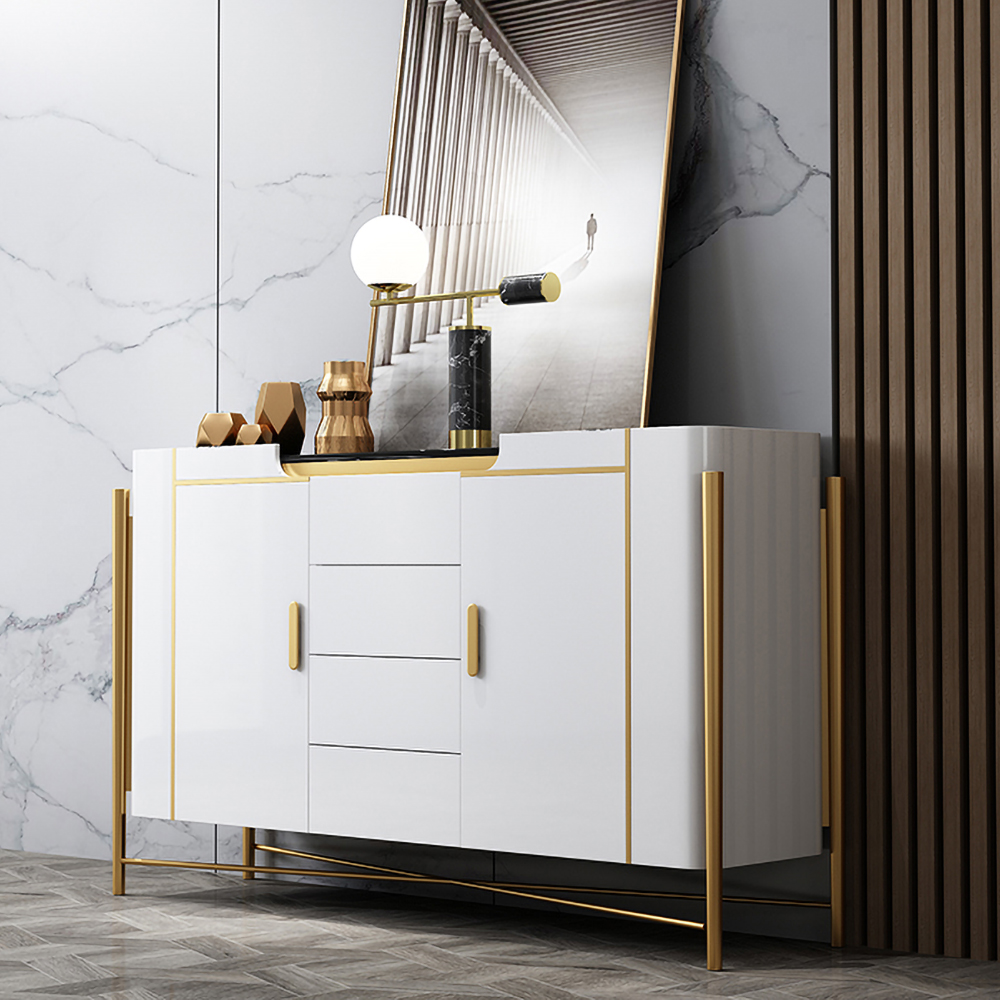
Marble veneer over a board core, 59.1" L x 15.7" W x 35.4" H — real stone, lighter than a slab.
Marble veneer — real stone over a board core.

55.1"W x 15.7"D x 31.5"H round profile at a different price point.
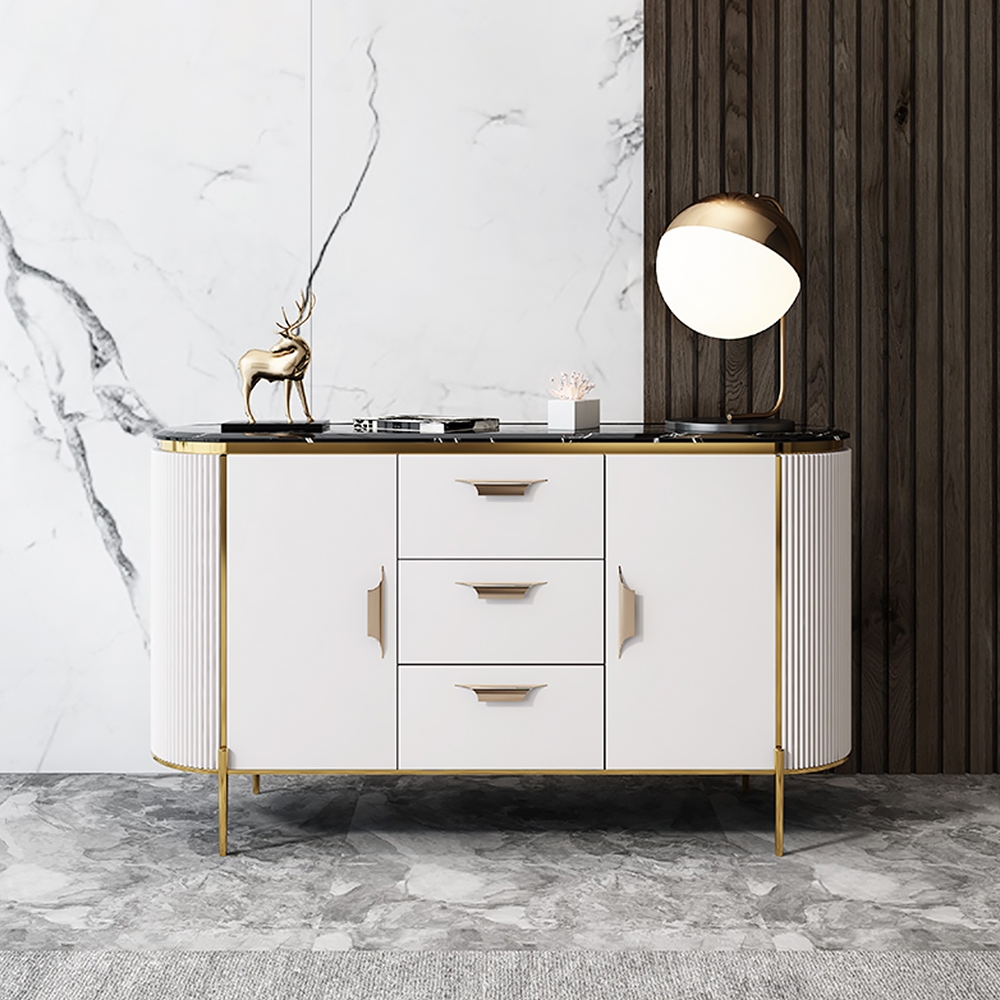
Faux marble top. Non-porous, so no sealing and no etching.
Faux marble — non-porous, no sealing needed.
Selections reviewed 10 August 2026. We do not quote prices here — check the retailer for the current one. We earn a commission if you buy through these links, at no extra cost to you — how this site makes money. Material is what the retailer states; where they do not say, we write “not stated” rather than guess.
Looking after it
Marble is calcium carbonate, so acid dulls the surface on contact — the mark that follows is not dirt and will not clean off. Before you buy, it is worth knowing how to clean it without damaging it, whether it needs sealing, what a dull mark actually is, and whether honed or polished suits how you will actually use it.